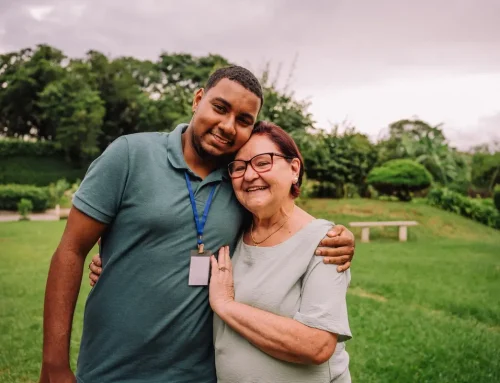

Stages of dementia care progress through early, middle, and late phases. Each stage requires a different support approach. Recognizing these stages helps families provide the right care at the right time, letting your loved one live with dignity.
Every person experiences dementia differently. Some days, your parent may remember every detail of their wedding, while on others, they might forget having breakfast. As you notice these shifts, you adapt and wonder what lies ahead.
As dementia progresses, care must adapt. What works in the early stages won’t meet needs later. By understanding these shifts, families can make informed decisions about care options.
IMAGE SUGGESTION: A caregiver sitting beside a senior in a comfortable living room, engaged in conversation, natural lighting, showing compassionate care interaction
Early-Stage Dementia Care: Supporting Independence
During early stages, your loved one functions relatively well but shows memory lapses. They might forget names, misplace items, or struggle with planning tasks.
Care focuses on safety while preserving autonomy. You’ll notice subtle mood or personality changes. Some people withdraw from activities they once enjoyed.
Research from the Alzheimer’s Association shows early detection improves outcomes. Families have time to make legal and financial arrangements while their loved one can participate.
Support strategies include:
- Creating daily routines and visual reminders
- Simplifying tasks without taking over completely
- Addressing safety concerns (removing tripping hazards, installing grab bars)
- Encouraging social connections and engaging activities
The key is maintaining your loved one’s sense of control. Let them dress themselves, even if it takes longer. Allow them to make choices about meals. This stage can last two to four years.
Middle-Stage Dementia Care: Increasing Support
Middle stages present the longest and most challenging phase of dementia. Your loved one needs more hands-on help with daily activities. They may confuse words or forget recent events. They can also have trouble recognizing familiar places.
Behavioral changes become more pronounced. You might see mood swings, restlessness, or wandering. Sleep patterns shift. Some people become agitated in late afternoon, a phenomenon called sundowning.
During this phase, professional care often becomes necessary. Many families choose memory care communities designed specifically for these needs.
Care needs include:
- Help with bathing, dressing, and grooming
- Medication management
- Supervised activities to prevent wandering
- Redirection during confusion or agitation
- Incontinence care
Communication becomes more difficult. Speak slowly and use simple sentences. Make eye contact. Avoid correcting mistakes that don’t matter.
This stage typically lasts between two and ten years. The variation depends on individual health factors and the type of dementia.
Late-Stage Dementia Care: Comprehensive Support
Late stages require around-the-clock care. Your loved one loses the ability to communicate verbally, control movement, and recognize family members.
According to a study in the Journal of the American Medical Association, late-stage dementia patients benefit most from specialized care settings. Staff in these settings can address complex medical needs.
Care becomes highly specialized:
- Total assistance with eating, drinking, and swallowing
- Mobility support and repositioning to prevent bedsores
- Pain management (they can’t verbalize discomfort)
- Infection prevention
- End-of-life planning
While verbal communication fades, your presence still matters. Hold their hand. Play familiar music. Speak in soothing tones.
Many families work with hospice care during this final stage. This period typically lasts one to three years. The focus shifts to comfort and dignity. and dignity.
How Care Settings Adapt to Each Stage
Different stages of dementia care call for different living arrangements. Assisted care communities work well for early to moderate stages. They offer support while encouraging independence.
Memory care units provide specialized environments for middle to late stages. These secured spaces prevent wandering while maintaining familiar routines.
| Stage | Duration | Primary Needs | Recommended Setting |
| Early | 2-4 years | Memory support, safety modifications | Home with support |
| Middle | 2-10 years | Daily living assistance, behavioral management | Assisted or memory care |
| Late | 1-3 years | 24/7 medical care, comfort measures | Memory care with hospice |
Recognizing When Care Needs Change
Watch for signs that your loved one needs a higher level of care:
- Forgetting to eat or take medications
- Becoming unsafe at home (leaving stove on, wandering)
- Requiring help with most daily tasks
- Showing aggressive behaviors
- Experiencing frequent falls
Families often struggle with the decision to move a loved one into professional care. But providing proper care isn’t about breaking promises. It’s about ensuring safety and quality of life.
Consider your well-being too. Caregiver burnout affects physical and mental health. Maintaining your health allows you to continue supporting your loved one.
Things to Know About Dementia Care Stages
Assessment Tools Matter. Professionals use standardized tests like the Functional Assessment Staging Test (FAST) to determine care needs. These evaluations measure cognitive and physical abilities.
Stages Overlap. Your loved one won’t progress through stages linearly. You might see improvements on good days followed by rapid decline. This is normal.
Care Plans Evolve. What works this month may need adjustment next month. Regular assessments help care teams adapt.
Medical Conditions Accelerate Decline. Urinary tract infections and dehydration can temporarily worsen dementia symptoms or speed progression.
Making Decisions About Care Stages
Start conversations about future care while your loved one can participate. Discuss preferences for living situations and medical interventions. Document these decisions legally.
Visit potential care communities before you need them. Knowing your options reduces stress when transitions become necessary.
Remember that seeking help isn’t failure. Professional caregivers have training families can’t replicate at home.
At Farmington Square Beaverton, we understand each stage of dementia care requires specialized approaches. Our memory care program adapts to changing needs while maintaining your loved one’s dignity. Contact us to learn how we can support your family.
Frequently Asked Questions
How long is the last stage of dementia?
The final stage typically lasts one to three years, though some individuals may progress faster or slower based on overall health and dementia type.
Do dementia patients do better at home or in a nursing home?
Middle to late-stage dementia patients often benefit from specialized memory care communities with trained staff and structured environments. Early-stage patients may manage well at home with support.
What is the gold standard for dementia care?
The gold standard combines person-centered care, trained staff, secure environments, meaningful activities, and family involvement. Memory care communities that specialize in dementia provide this comprehensive approach.
How long can a person with dementia live at home?
Many people manage at home during early stages with family support. As dementia progresses to middle stages, professional care typically becomes necessary for safety.
How do you know when a dementia patient is transitioning?
Signs include increased confusion, difficulty swallowing, repeated infections, significant weight loss, and reduced responsiveness. Hospice evaluation helps determine if someone is entering the final stage.